

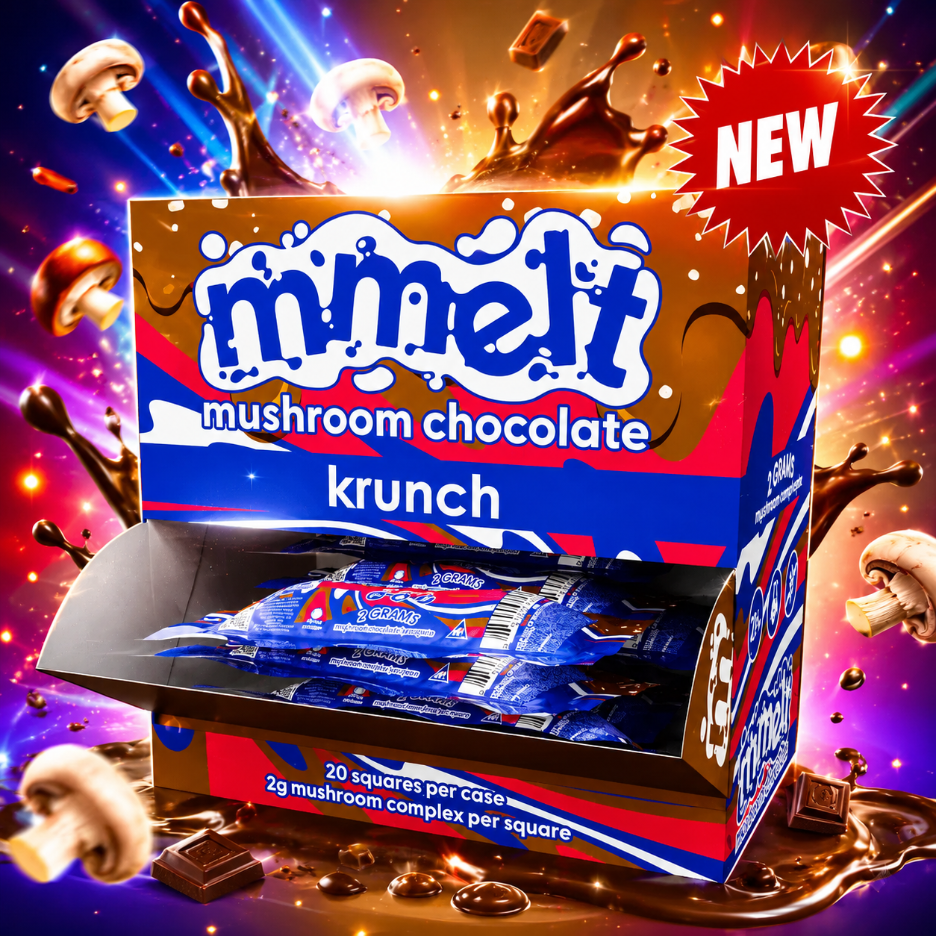
Mushroom edibles have moved from a niche curiosity to a genuine category on shelves and online stores, and mushroom chocolate bars are leading that shift. Part of the appeal is obvious: chocolate is a familiar, comforting format that makes trying something new feel a lot less intimidating than a capsule or a tincture. But as demand has grown, so has the number of brands competing for attention, and not all of them are equally transparent about what's actually inside the bar you're about to order.

That makes label literacy genuinely useful before you buy. Whether you're new to the category or just switching brands, knowing what to look for on a mushroom chocolate label, potency, ingredients, and testing, helps you shop with confidence instead of guessing. Mmelt's Mushroom Chocolates are a good reference point for what a properly labeled, well-documented product should look like.
This guide is written specifically for people shopping the way most of us actually shop now: from a phone, scrolling through product photos and a short description, deciding in a couple of minutes whether to add something to a cart. That's a very different experience from picking a product up off a shelf and turning it over to read the back panel, which means online shoppers have to be a little more deliberate about actually finding and reading the details that matter before checking out.
Start With Potency Per Piece, Not Just Per Bar
One of the most common label mistakes new buyers make is looking only at the total potency listed for the whole bar without checking how that total is divided across individual squares or pieces. A bar listed at a high total milligram count can be misleading if it's meant to be broken into ten or twenty individual pieces, each delivering a much smaller, more manageable dose per serving.

A clearly labeled product should tell you both numbers: the total potency of the full bar and the potency per individual square or piece. This distinction matters most for anyone new to mushroom edibles, since starting with a single piece and understanding exactly how much you're consuming is the safest way to learn how a product affects you before working up to a larger serving.
Ingredients: What Should (and Shouldn't) Be on the List
A trustworthy mushroom chocolate label should read like a short, recognizable list rather than a wall of unfamiliar additives. Look for real chocolate as a base ingredient, not just cocoa-flavored filler, along with a clearly named active ingredient rather than a vague proprietary blend. If a brand won't tell you exactly what's inside and in what proportion, that's a signal to keep looking.
Flavor variety is a legitimate reason brands add ingredients, and that's fine as long as those additions are named clearly. Options ranging from classic milk and dark chocolate to more adventurous combinations like cookies and cream or birthday cake style bars are common in the category now, and a well-labeled product will name each flavor ingredient rather than hiding behind generic terms like 'natural flavor blend' with no further detail.
It's also worth paying attention to allergen disclosures, since chocolate products frequently contain or are processed alongside common allergens like milk, tree nuts, or soy. A properly labeled product should call these out clearly, the same way any packaged food product legally should, rather than leaving you to guess based on the flavor name alone. This is a small detail that's easy to overlook when you're focused on potency, but it matters just as much for a genuinely safe purchase.
Lab Testing: The One Line You Should Never Skip
If there's a single line item worth checking before you ever add a mushroom chocolate bar to your cart, it's whether the product has been independently, third-party lab tested. This is different from a brand simply claiming their product is high quality. Third-party testing means a lab with no financial stake in the sale has verified the potency and checked for contaminants, giving you an objective source of truth rather than a marketing claim.
Reputable brands make this easy to verify rather than something you have to dig for. Mmelt's Lab Results page is a straightforward example of what that transparency should look like: results you can check before you buy, not after you've already opened the package and have questions.
Flavor, Format, and Fit for Your Routine
Once potency, ingredients, and testing check out, the rest of the decision comes down to what actually fits your lifestyle. Individual bars work well for people who want to try a flavor before committing to a bigger order, while party pack formats make more sense if you're planning ahead for a gathering or simply prefer to stock up once you've found a flavor you like. Mushroom Chocolates Party Pack options exist specifically for that kind of bulk, plan-ahead buying.
It's also worth thinking about how a chocolate format fits your daily routine compared to other formats like gummies or shots. Chocolate tends to have a slower, more gradual onset because of how it's digested, which some people prefer for an evening wind-down, while gummies or shots can appeal to people who want a faster-acting, grab-and-go option.
Storage is another practical factor worth considering before you order. Chocolate is more temperature-sensitive than gummies, since it can soften, melt, or develop a dull, chalky bloom on the surface if it's exposed to heat during shipping or left somewhere warm at home. A brand that ships with appropriate seasonal precautions, and that clearly explains how to store your bar once it arrives, is signaling the same kind of attention to detail that should show up everywhere else on the label.
Common Label Red Flags Worth Knowing
Beyond what a good label includes, it helps to know what a concerning one looks like. Be cautious of bars that list potency only as a single vague range, like '1000-3000mg,' without a clear, specific number for the actual product you're ordering. That kind of imprecision makes it nearly impossible to dose responsibly, especially for a new user trying to start with a small, manageable serving.

Watch for pricing that seems dramatically lower than comparable products in the category, since unusually cheap pricing can sometimes correlate with cut corners on sourcing, testing, or ingredient quality. Similarly, be wary of packaging that leans heavily on flashy graphics and bold marketing claims but is light on actual product information, batch numbers, testing dates, or a clear ingredient breakdown. A brand confident in its formulation generally has no reason to hide the details, and tends to make that information easy to find rather than something you have to hunt for.
Reviews can be a useful supplementary signal too, though they should never replace checking the label yourself. Consistent feedback about mismatched potency, inconsistent effects between batches, or unclear labeling is worth taking seriously, especially when it comes from multiple independent buyers rather than a single outlier complaint.
It's also reasonable to be cautious about brands with no clear return, refund, or customer service policy visible on their site. A legitimate company selling a consumable product should make it easy to find contact information, a clear shipping policy, and a straightforward way to reach a real person if something arrives damaged or incorrect. The absence of that basic infrastructure is often a sign of a newer, less established operation, which doesn't automatically mean the product is bad, but does mean you're taking on more risk with less recourse if something goes wrong.
Timing Your Order Around How You Plan to Use It
One last practical consideration is timing your order around when you actually plan to use the product, rather than ordering at the last minute for a specific event. Standard shipping typically takes several business days, and building in a buffer means you're not opening a package the night before a gathering without having had a chance to try a single piece first and confirm how it affects you. Trying a new product for the first time in a low-pressure setting, on a normal evening at home rather than right before a party, is simply a smarter way to get acquainted with a new bar or flavor.
This kind of planning also gives you room to reorder your favorite flavor if you discover you like it, rather than scrambling for a same-week delivery. Treating a first order as an exploratory step, rather than committing to a large quantity of an untested flavor, is generally the more satisfying way to build a relationship with a new brand over time.
Finally, keep in mind that your own taste in flavor profile matters just as much as any of the technical label details once you've confirmed a product is trustworthy. Two equally well-labeled, equally well-tested bars can still feel completely different to you personally based on flavor preference alone, so don't be afraid to try more than one variety over your first couple of orders rather than assuming the first bar you tried represents the whole brand.
Reading a Label the Smart Way, Start to Finish
Putting it all together, a smart label check before you buy online should hit four things in order: total potency and potency per piece, a clean and clearly named ingredient list, visible third-party lab testing, and a format that actually matches how and when you plan to use the product. Skipping any one of these steps is how people end up disappointed, either because a bar was stronger or weaker than expected, or because they simply couldn't verify what they were consuming in the first place.

It only takes a couple of extra minutes on a product page to check all four boxes, and that small amount of diligence is what separates an informed purchase from a guess. Browsing the full Mmelt product line gives you a chance to compare labels side by side before deciding what fits your routine best.
Conclusion — Shop Like You Read Every Label
Mushroom chocolate has earned its place as a genuinely popular everyday edible format, but that popularity means the label on the bar in front of you matters more than ever. Checking potency per piece, scanning the ingredient list for clarity, confirming third-party lab testing, and picking a format that fits your actual routine turns online shopping from a guessing game into an informed decision.
Ready to put this checklist into practice? Explore Mmelt's Mushroom Chocolates and see what a fully transparent label looks like from start to finish. A few extra minutes of reading now is a small price for a purchase you can feel genuinely confident about, especially the first time you try a new flavor or format.
FAQs
What does potency per piece mean on a mushroom chocolate label?
It's the amount contained in a single square or piece of the bar, as opposed to the total potency of the entire bar. Checking this number helps you understand exactly how much you're consuming per serving.
How do I know if a mushroom chocolate brand is lab tested?
Reputable brands publish third-party lab results directly on their website, often on a dedicated lab results or COA page, so you can verify potency and safety before you buy.
Should I be worried about the ingredient list on a mushroom chocolate bar?
A trustworthy label should list real chocolate and a clearly named active ingredient rather than vague proprietary blends. If a brand won't name its ingredients clearly, that's worth treating as a red flag.
Is a mushroom chocolate bar or a mushroom gummy better for beginners?
Both can work well for beginners as long as you check the potency per piece and start with a single serving. Chocolate tends to have a slightly more gradual onset, which some new users prefer.
How long does shipping take when I order mushroom chocolate online?
Orders are typically processed within one to three business days, with standard shipping taking an additional three to seven business days depending on your location.
Share:
Lychee Lemon Kick: A Citrus Twist on Mushroom Gummies
Tiki Punch and Mango Meltdown: Tropical Mushroom Gummy Flavors Compared